
 READ HABITABLE’S NEW REPORT
Designing Out Plastics: A Blueprint for Healthier Building Materials
 Habitable
I’ve spent much of the past decade thinking about what it really takes to change systems. Not nudge them. Not optimize around the edges. But truly transform them.
What I keep coming back to is this: transformation requires people who see the problem from every angle—scientists and financiers, designers and advocates, seasoned leaders and the next generation who will carry this work forward.
That belief shapes everything we are building at Habitable. We are working toward a new materials economy—one that supports the health of all people and the planet. Doing so requires honesty about what is no longer sufficient, and boldness about what is now possible.
It also requires the right people at the table.
Our board members are not just advisors. They are co-architects of our strategy, ambassadors of our mission, and influential voices shaping the future of the materials movement. That’s why I am so excited to welcome four new members who bring exactly the perspectives and capabilities this moment demands: Seydina Fall, Kathleen Egan, Joon Ta, and Jennifer Uchendu.
One of the most important questions we face is: How do we align economic incentives with the transformation we seek?
Seydina Fall helps answer that question.
A senior lecturer in finance at Johns Hopkins Carey Business School and co-faculty director at the Institute for Planetary Health, Seydina works at the intersection of finance, cities, and human health. His work explores how the built environment can be designed and financed to support both people and ecosystems.
From Singapore to Kuala Lumpur, he has convened global leaders around a shared challenge: how do we build environments that sustain life rather than deplete it?
Seydina brings a rare combination of financial expertise and systems thinking—helping us unlock the models, partnerships, and capital flows needed to scale lasting change.

At Habitable, we know that when people have access to credible, actionable information, they make better decisions.
Kathleen Egan has built her career on that same belief.
As co-founder and CEO of Ecomedes, she has developed a platform that helps building professionals find and specify sustainable products. Her work focuses on what she calls the “Intention Gap”—the space between sustainability goals and real-world purchasing decisions.
Kathleen also brings deep leadership in the movement to reduce plastic pollution, including her role as outgoing Board Chair of The 5 Gyres Institute.
Her expertise sits squarely at the intersection of data, tools, and decision-making. Kathleen understands, as we do, that the solution requires better science, better data tools, more accessible information, and a procurement ecosystem designed to help people act. She is exactly the bridge between intent and impact that we need.
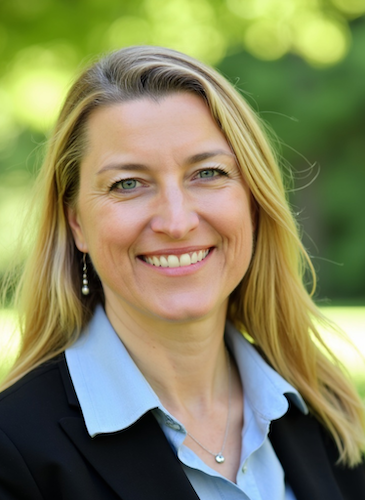
Joon Ta represents the next generation of design leadership—and the future of our field.
A designer at MSR Design, Joon approaches design as a form of research and inquiry. Her work has explored forced labor in material supply chains, the health impacts of recycled materials, and the embodied carbon of interior finishes.
She also plays an active role in advancing sustainability and health through the International Interior Design Association.
Interior designers are among the most powerful—and often overlooked—drivers of material decisions. Joon brings clarity to what those decisions mean: they shape who is protected, who is exposed, and how impacts are distributed across communities.
Her combination of technical rigor and equity-centered thinking is exactly what this work requires.

Jennifer Uchendu brings a powerful global perspective—and an extraordinary ability to connect with the next generation of changemakers.
As founder of SustyVibes, one of Africa’s largest youth-led sustainability platforms, Jennifer has built a movement that combines research, advocacy, and community engagement. Her work has reached across the continent, making sustainability accessible, relevant, and actionable.
Named to the BBC 100 Women list, Jennifer has also pioneered work on climate change and mental health through the Eco-Anxiety Africa Project.
She brings a critical insight: for transformation to take hold, sustainability must meet people where they are. It must resonate, inspire, and mobilize.
Jennifer ensures that the future we are building is inclusive, global, and driven by those who will inherit it.

These four leaders join a board already distinguished by its breadth of expertise and depth of commitment—spanning public health, green chemistry, design, equity, and systems change.
What unites the Habitable board is a shared conviction: the status quo is not working—and it is not acceptable.
Together, this board reflects the scale and complexity of the challenge before us—and the opportunity to meet it.
Habitable is a 25-year-old organization that has never been more urgently needed. And I have never been more optimistic about what we can accomplish together.
Please join me in welcoming Seydina, Kathleen, Joon, and Jennifer—and in recognizing the extraordinary group of leaders who are helping to drive a materials economy that is in harmony with nature and supports all life.
— Gina Zaitz Ciganik
CEO, Habitable

 Health
I’m thrilled to be here, together with two of my colleagues, Teresa McGrath (Chief Research Officer), and Rebecca Stamm (Principal Researcher). While much of the treaty discussion will focus on single-use plastics and the plastic waste problem, we’re in Geneva to make sure that the shocking amount of plastics in the building and construction sector are no longer overlooked. We’re also alerting attendees that there are already healthier alternatives to plastic building materials.
Since the Global Plastics Treaty Negotiations began in 2022, there has been an ongoing international effort to create a legally binding agreement. A main tension is that ambitious nations want to address the full lifecycle of plastics, including reducing plastic production, mitigating waste, and ending plastic pollution. Many oil and gas producing nations want to limit the treaty to managing plastic waste as a means to avoid production caps. November 2024 was the 5th session – INC-5, which was supposed to be the last. Because agreement was not reached, a final session was created .INC-5.2, will be held in Geneva, August 5-14. The pressure is on!
Preparing for this moment has been intense. We’ve been devouring a whirlwind of reports, articles, and webinars from different scientists, NGOs, and other organizations across the globe to learn more about the Treaty’s draft text, the sticking points, and new science on plastic’s impacts on people and the planet. Testimony from Indigenous Peoples and other marginalized communities that have been disproportionately harmed by plastic pollution—from production to waste—has been particularly poignant.

What is striking to me is that in all of the vast volumes of information being circulated, the building and construction sector is rarely, if ever mentioned. Most plastic reduction efforts focus only on certain single use plastic products or on packaging, which is currently the largest plastics use. Though important, addressing these alone will not be robust enough to mitigate the massive plastics problem.
The building sector is the second largest plastics user and is rapidly growing. Subsidies have made plastics cheap, driving an insatiable demand for plastics and making them ubiquitous in buildings. From flooring and siding, to insulation, and even paint, plastic use in the building and construction sector is on the rise and has the potential to surpass current packaging production in the coming decades. Still, the role of plastics in the built environment is overlooked – truly, “hidden in plain sight”. Despite growth across the globe, many scientists, policymakers, and building professionals are still unaware of the scale and impact of plastic pollution tied to building materials.
The building and construction sector should be recognized in all efforts to address the harms of plastics, however, it is routinely excluded. Reasons that plastic building materials are often ignored in plastic policy discussions could include:
Policy Recommendations
The Habitable team is here in Geneva to share our research on the extraordinary volume of plastic building products and the devastating scale of pollution and health impacts at all points in their lifecycle. We developed a policy brief and recommendations, called Buildings’ Hidden Plastic Problem. It currently has 24 endorsing organizations and is translated into Spanish and French.
Meaningful progress at the UN Plastics Treaty negotiations requires addressing more than waste, like plastic bags or straws. Reducing building and construction plastics is also critical to eliminating the harms plastics cause to human health and the environment.
Solutions Exist
There are many no- or low plastic building materials that meet cost and performance criteria. We work with many architectural firms and developers who are already prioritizing healthier, natural alternatives.
Join the leaders moving away from plastic building products. We can help. Our Informed product guidance translates our deep research into a simple red-to-green ranking system. Product types that are ranked yellow or green are healthier options and tend to contain less plastic or avoid the worst plastics—including PVC and polystyrene—while reducing the overall toxic chemical harms over the product life cycle.
Habitable’s Geneva Goals
Habitable supports an ambitious and effective Plastics Treaty. We are in Geneva to advocate for the building and construction sector’s massive plastic problem to be acknowledged and addressed. We will also enlist new global partners in a growing movement to leverage the building sector’s scale to reduce plastics, and partner with leading building professionals as allies towards healthier people and planet. Better solutions exist. Let’s start using them. Follow along on Habitable’s social media for updates on progress and news coming out of Geneva.