
 READ HABITABLE’S NEW REPORT
Designing Out Plastics: A Blueprint for Healthier Building Materials
 Health
Everyone has heard the news about the health concerns associated with bisphenol A (BPA) leaching from baby bottles, food can liners and perhaps most famously those distinctive polycarbonate plastic water bottles popularized by Nalgene.[1] Last May, Chicago became the first city in the U.S. to ban the sale of baby bottles and sippy cups made from BPA. Few, however, are aware that BPA is a chemical component of epoxy resins used in a wide range of building materials, typically paints, sealants, adhesives and fillers,[2] that may put manufacturing workers, installers, and building occupants at risk.
Epoxy resins are used in building materials, often listed on a material safety data sheet as a proprietary mixture, without disclosure that the resin is made from BPA. While manufacturers claim that the BPA in epoxy resins is consumed entirely in the production process and does not show up in the final products, scientists investigating the metabolic breakdown of epoxy resins during occupational exposure have found that epoxy resin products can be metabolized in the human body back into BPA and may impact the endocrine and reproductive system of those exposed.[3]Animal studies have linked this hormone-disrupting chemical to prostate cancer, breast cancer, pre-diabetes (insulin resistance), abnormal fat metabolism, early puberty, and changes in the way the brain develops resulting in behavioral abnormalities.[4]
The BPA expert panel from the Center for Evaluation of Human Risks to Reproduction raised concern about BPA in epoxy-based resins, reporting to the National Toxicology Program that, “several studies collectively suggest hormonal effects of bisphenol A exposure, including one in occupationally exposed male workers likely exposed through multiple routes including inhalation…”[5] The NTP’s final monograph states that “a number of studies, when considered together, suggest a possible effect on reproductive hormones, especially in men exposed to higher levels of bisphenol A in the workplace.”[6] Germany has already instituted occupational exposure limits for bisphenol A.[7]

Recent biomonitoring studies have raised concerns about widespread human exposure to BPA. A National Health and Nutrition Examination Survey (NHANES) study found that more than 90% of people in a representative sample of the general population have BPA residues in their urine[8] and that there must be significant non-food exposures to reach such levels.[9]
It is likely that BPA in building products will become subject to greater health and safety regulation, but responsible specifiers do not need to wait for the regulatory system to catch up with the science to protect their clients. Products are available that can replace epoxy-based coatings and adhesives. For example, many paint companies now offer high-performance low-VOC water-based acrylic paints and acrylic-based adhesives for flooring, carpets, and wall covering. For applications where high-performance BPA-free substitutes are not yet available, the act of asking manufacturer reps for products without bisphenol A is an important step to prod the industry to bring safer high performance alternatives to market.
For a comprehensive discussion of the emerging science on BPA risks, read “Bisphenol A in Building Materials: High Performance Paint Coatings.”
HealthThe incidence in the US population is 4 in 100,000.[1] This is the largest brain cancer cluster identified in a non-occupational setting. In epidemiological terms, the chance that this is a coincidence is something like your chance of winning the lottery. It’s far more likely that the 14 victims share some sort of common link. The evidence in this case points to the vinyl chloride in the groundwater flowing into their wells from a nearby factory that made vinyl food wrap.[2]
Aaron Freiwald is an attorney representing the cancer victims in a class action lawsuit against Rohm & Haas, which bought the suspect facility from the Morton Chemical Company in 1999. According to Freiwald, “By the time we are done with this case, the association between vinyl chloride and brain cancer is going to be much stronger. They are going to have to revise the way current textbooks discuss cancer risks associated with vinyl chloride.”
One critical factor in the case is the clear connection between the vinyl chloride and the cancers. It can be difficult to prove a specific chemical causes a specific cancer because so often people have multiple exposures to carcinogens. But, Lake McCollum is an isolated community. There are no other significant industrial sources of chemical contamination to which the 14 victims have been exposed. According to the International Agency for Research on Cancer (IARC), vinyl chloride is carcinogenic to humans and has been associated with brain cancer.
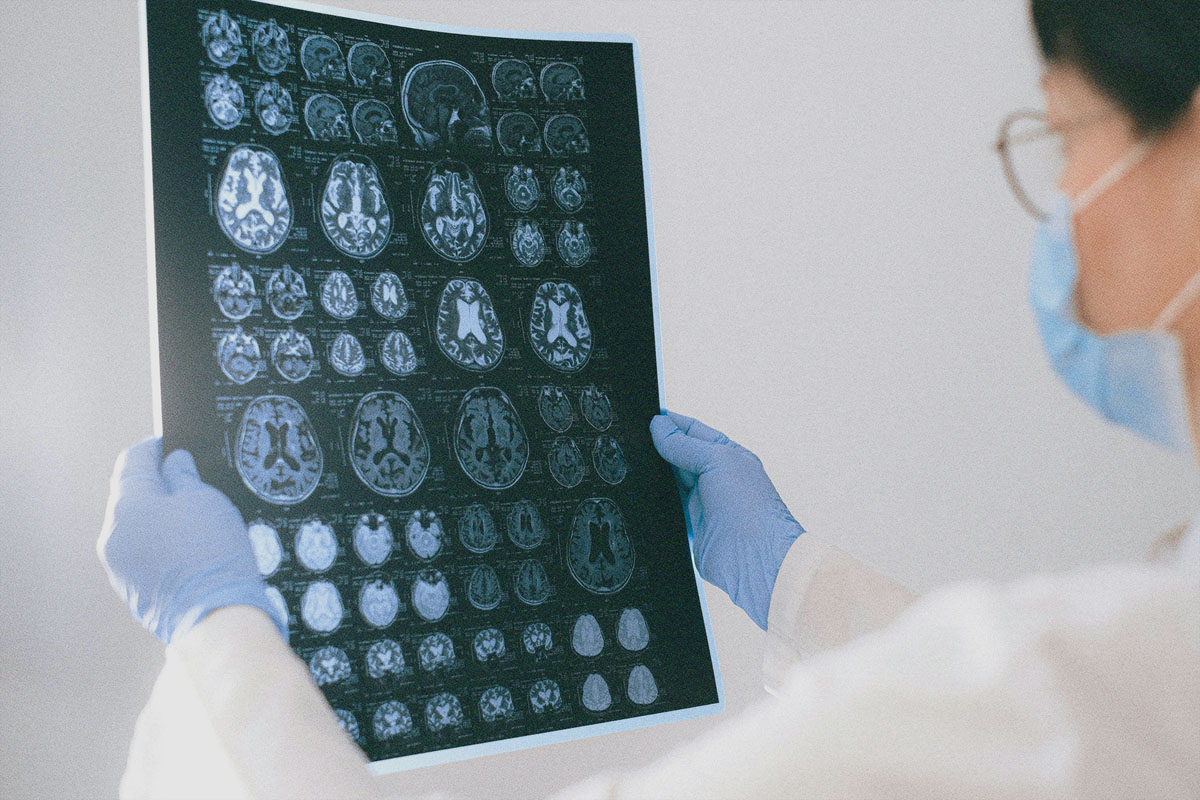
Improved methods of analyzing DNA allow scientists to compare cancer cells in ways not available in earlier cases – such as the case of vinyl chloride plant worker Dan Ross featured in the PBS documentary Trade Secrets, and HBO’s Blue Vinyl. This new DNA analysis shows that the damage to brain tissue among the Illinois victims is strikingly similar, and that this pattern is different from other types of brain cancers – further evidence of a common local cause.
Freiwald is most excited by what his investigation has uncovered about industry-sponsored studies of vinyl workers. These have been the backbone of the vinyl industry’s defense that there is at best a “weak statistical correlation” between vinyl chloride exposure and brain cancer. The industry studies have long been criticized for having diluted the surveyed worker population with employees unlikely to have been exposed to vinyl chloride. “Our questioning of industry experts under oath,” says Freiwald, “has brought to light evidence that is going to strike at the heart of the whole industry’s defense of vinyl chloride.”
In depositions taken as part of this case, Freiwald says that industry experts acknowledged that had just one more case of cancer been identified in the worker population that was studied, the conclusion would have changed from a “weak statistical correlation” at best to a “statistically significant” correlation.
The McCollum case reminds us that the many problems associated with chlorinated materials, such as PVC plastic, are likely under-estimated, masked by the limits of scientific investigations to date, and obscured by the intensive cigarette science campaigns of its manufacturers.
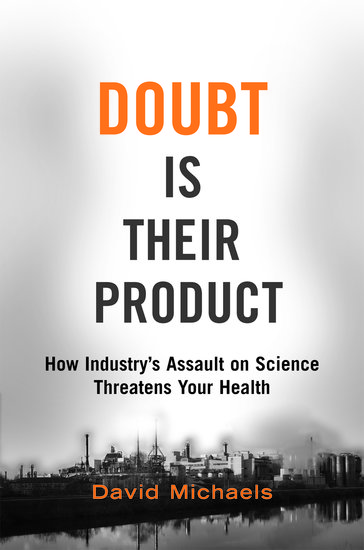
HealthIn Doubt Is Their Product, Dr. David Michaels, a former Assistant Secretary of Energy for Environment, Safety and Health under President Clinton, exhaustively documents the rise of the “product defense industry” and its strategy of using scientific discipline to establish controversies (i.e., starting something that is intended to continue or be permanent[1]), rather than establish facts (i.e., investigating something to confirm its truth or validity[2]) as a means of frustrating efforts to address public health risks from asbestos, benzene, aspirin (Reye’s syndrome in children), global warming and, of course, vinyl.
“Doubt is our product,” wrote a Brown and Williamson[3] executive in 1969, three years after the iconic warning label first appeared on cigarette packs, “since it is the best means of competing with the ‘body of fact’ that exists in the minds of the general public. It is also the means of establishing a controversy.”[4]
Michaels concentrates his reporting on his considerable first-hand experiences where, he writes, “I had the opportunity to witness what is going on at close range.”[5] He bears witness for 256 pages and backs up his observations with an additional 119 pages of endnotes, many of these referencing original documents that can be accessed through his website, www.defendingscience.org.
One of his first-hand experiences involves polyvinyl chloride plastic, also known as PVC or vinyl. The story of the vinyl industry’s cover-up of rare cancers among its workers in the mid-1970’s has been well documented elsewhere[6], including the documentary Blue Vinyl and the PBS investigative report Trade Secrets. Michaels connects the dots, documenting how, in 1974, the same public relations firm that created the “selling doubt” strategy for the tobacco industry would “establish uncertainty” about the risks of vinyl chloride for the PVC industry. They’re still at it.
Doubt Is Their Product concludes with a chapter offering “a dozen ways to improve our regulatory system.” Many of these could be adapted by green building policy makers or by anyone interested in testing whether an industry stakeholder is interested in establishing the facts, or just establishing a perpetual controversy.[7]
 Health
“To protect the health of our state’s children,” California Governor Arnold Schwarzenegger signed legislation on October 14, 2007 prohibiting the use of phthalates (pronounced “thall-eights”) in childcare products designed for babies and children under three years of age.
Phthalates are used as plasticizers to soften polyvinyl chloride plastic, also known as PVC or vinyl, including a wide range of building products such as vinyl flooring, wallcovering and upholstery.
Phthalate plasticizers are not chemically bound to PVC. They have been found to leach, migrate or evaporate into indoor air and atmosphere, foodstuff, IV solutions and other materials, etc. Consumer products containing phthalates can result in human exposure through direct contact and use, indirectly through leaching into other products, or general environmental contamination. Humans are exposed through ingestion, inhalation, and dermal exposure during their whole lifetime, starting in the womb. Phthalates come in many different formulas. Most haven’t been tested or examined at all for human health impacts. The Consumer Product Safety Commission has noted that one phthalate formula common to certain building materials — DINP [1] — is a mixture of up to 100 chemical variants, of which only five have been minimally studied [2]. Others have been found to pose a risk of serious negative health impacts at very low doses.
Phthalates have been shown to have negative effects on human health including interference with the natural functioning of the hormone system, and reproductive and genital defects. Phthalates may lower sperm count and are associated with the risk factors for testicular cancer, as well as early onset of puberty and premature birth.
In June 2005, HBN discussed recent research findings that the cumulative impact of different phthalates leads to an exponential increase in associated harm, and documented levels of phthalates found in humans at levels higher than levels shown to cause adverse health effects. A 2007 study concluded that the exposure of children to phthalates exceeds that in adults, warning, “Current human biomonitoring data prove that the tolerable intake of children is exceeded to a considerable degree, in some instances up to 20-fold” [3].
Phthalates have been found in high quantities in studies of household dust. Other studies have documented links between childhood asthma and phthalate exposure from vinyl flooring. Because phthalates are not a volatile organic compound (VOC), however, they are usually not accounted for by indoor air quality standards such as those used to certify green building materials.

California now joins the EU [4] in restricting the use of phthalates in the use of children’s products, and many other US states are expected to take up legislation similar to that signed by Governor Schwarzenegger [5].
Like the human carcinogens vinyl chloride and dioxin, phthalates are uniquely associated with PVC [6]. It is this triple threat from PVC that distinguishes it as the worst plastic for environmental health and green building. Regrettably, there are still few restrictions on the use of vinyl in green buildings.
HealthToxic chemicals common to home furnishings and electronic equipment have been found in household dust, including chemicals internationally recognized as harmful or toxic to the immune and reproductive systems; babies and young children are particularly at risk from exposure. That is the finding of a 2005 report, Sick of Dust: Chemicals in Common Products, which investigated six classes of chemicals in dust samples taken from 70 homes in seven states across the U.S. Among the chemicals documented in household dust are two — phthalate plasticizers and organotin stabilizers — that are ubiquitous in PVC vinyl building materials.
of phthalates manufactured are used in PVC products, and have been documented as leaching from shower curtains and flooring.
Animal studies have found phthalates disrupt reproductive systems, particularly in male offspring, and can contribute to male infertility. Phthalates have also been linked to asthma and respiratory problems in children.
Organotins, which are found in PVC water pipes, PVC food packaging materials, and many other consumer products, are poisonous in even small amounts, and can disrupt the hormone, reproductive, and immune systems.
In addition to the two chemicals commonly associated with PVC building materials, the report also found high concentrations of brominated flame retardants, which are incorporated into many plastics, including PVC, and electrical goods. Studies have revealed the breast milk of American women has 10 to 100 times higher concentration of PBDE, a type of flame retardant, than European women. According to Sick of Dust, a recent study indicates that levels of PBDE in Swedish breast milk began to decrease in 1997, possibly due to a voluntary phase-out of penta-DBE.
These findings add to the momentum of an anti-PVC movement which, according to a feature article in the Christian Science Monitor, is “picking up steam,” and provide additional ammunition for the many commenters who took aim at the USGBC’s draft PVC report that found “PVC does not emerge as a clear winner or loser.”
The Sick of Dust report ranks brand name companies and retailers on their use of hazardous chemicals, and provides an outline of fundamental changes needed to bring American chemical regulation up to a level that will protect basic health today and in future generations. But the easiest way to eliminate phthalates and organotins from household dust is to eliminate PVC from the household.
Health
In the last 40 years, polyvinyl chloride plastic (PVC) has become a major building material. Global vinyl production now totals over 30 million tons per year, the majority of which is directed to building applications, furnishings, and electronics.
The hazards posed by dioxins, phthalates, metals, vinyl chloride, and ethylene dichloride are largely unique to PVC, which is the only major building material and the only major plastic that contains chlorine or requires plasticizers or stabilizers. PVC building materials therefore represent a significant and unnecessary environmental health risk, and their phase-out in favor of safer alternatives should be a high priority. PVC is the antithesis of a green building material. Efforts to speed adoption of safer, viable substitute building materials can have significant, tangible benefits for human health and the environment. This report describes the full life cycle of PVC in the contemporary building industry from production to disposal.