
 READ HABITABLE’S NEW REPORT
Designing Out Plastics: A Blueprint for Healthier Building Materials
 Equity
Product manufacturers, policymakers, and professionals in the building industry are paying more attention to the potential health and environmental impacts of building products during installation and use, but there has been less consideration of the important chemical impacts, including contributions to environmental injustice or environmental racism, that may occur during other life cycle stages.
Healthy Building Network (HBN) teamed up with Energy Efficiency for All (EEFA) to expand understanding of products’ life cycle health and environmental justice impacts. Together, the two organizations developed a framework based on the principles of green chemistry and the principles of environmental justice, and applied this framework to two widely-used insulation materials: fiberglass and spray polyurethane foam (SPF) insulation.
Supporting Documents:
 Health
This comprehensive guide, designed for architects, engineers, and contractors, provides expert insights, academic research, and practical advice on various aspects of piping systems, including material properties, safety considerations, health risks, environmental impacts, and emerging trends.
Health
In this study several commercial paints were analyzed for volatile and nonvolatile per- and polyfluoroalkyl substances (PFAS), finding that paints could be potential sources of human exposure to PFAS, with one paint exceeding the reference dose for children and adults.
 Climate Change
Healthy Building Network (HBN) has often heard these two issues framed as a competition–a false choice. Instead, we know that these two powerhouses must work together for optimal results.
In 2022, HBN and Perkins & Will published a study highlighting building products that can do just that: optimize material health and lower their carbon footprint. This study identified key drivers and paths towards low embodied carbon and safer materials as well as when to consider and optimize both at the same time. To illustrate this point, we plotted an actionable path for project teams using flooring products as an example.
Team Low-Carbon Products: The embodied carbon of building materials contribute a whopping 11% to global carbon emissions.1 Most of these emissions happen before that product even gets installed. Additionally, the poorest countries and regions are those most impacted in terms of damage and loss of life by the effects of climate change.2 “That 11% might sound small compared with the impact of operational energy (28%), but for new construction, embodied carbon matters just as much as energy efficiency and renewables. That’s because the emissions we produce between now and 2050 will determine whether we meet the goals of the 2015 Paris climate accord and prevent the worst effects of climate change,” explains a BuildingGreen report.
Team Safer Materials: We spend 90% of our time indoors, and hundreds of industrial chemicals are found in our indoor spaces— in the dust, in the air we breathe, and in our bodies.3 The health impact of building materials are not limited to their time in use in the building, they often occur during manufacturing, installation, and at the product’s end of life. People living in close proximity to industrial facilities experience persistently worse air quality than average and exposure to industrial pollutants disproportionately impacts people of color.4 Another report suggests man-made pollution has exceeded the Earth’s safe operating boundaries.5 “Transgressing a boundary increases the risk that human activities could inadvertently drive the Earth System into a much less hospitable state, damaging efforts to reduce poverty and leading to a deterioration of human wellbeing in many parts of the world, including wealthy countries.” Professor Will Steffen, researcher at the Centre and the Australian National University, Canberra.6


Reducing toxic chemical use and the emissions associated with building materials NOW is a vital sustainability strategy for any project team.
The Research:
To identify the key drivers of embodied carbon and the key opportunities to reduce embodied carbon for each product type we read Environmental Product Declarations (EPDs), reviewed literature and data compilations, and conducted manufacturer interviews. The hazards associated with flooring products, the chemicals used to make those materials and the hazards associated with the chemicals used to install those products were collected using InformedTM product guidance and hazard data in the Pharos database.
Embodied Carbon:
Our research concluded that flooring products’ embodied carbon impacts are mostly associated with the raw material supply. The biggest opportunities to reduce embodied carbon in flooring comes from choosing a different product type that uses less impactful raw materials as well as products with longer service life. Carpet was consistently the most impactful product type due in part to its short service life. Plant-based flooring products, such as wood and natural cork, were consistently the least impactful.
Material Health:
Not surprisingly, the biggest opportunities to avoid chemicals of concern in flooring come from choosing a product type with typically fewer chemicals of concern. Products made from plastic, such as vinyl, nylon, or polyurethane tend to use more hazardous chemicals during manufacturing, installation, use, and end of life, than mineral or plant-based products. Selecting a product that is yellow or above in InformedTM color ranking Flooring Guidance, such as wood or linoleum, or even a non-vinyl resilient flooring will minimize the use of hazardous chemicals. Products in the red zone such as vinyl and carpet, should be avoided.
Conclusion:
When we looked at the opportunities to improve embodied carbon and improve material health for flooring we found that they were largely complementary.
These findings highlight the importance of pre-emptive design. Parallel to the way we conduct early modeling for energy or water use, the industry needs to model for embodied carbon and material health. A materials modeling approach–where the entire team is engaged early – before design development or construction development – will enable educated decisions before the design is set. Use HBN’s Embodied Carbon and Material health in Flooring and Drywall report and tools like Informed™ and the Carbon Smart Materials Palette to select typically healthier, low-carbon building product options.
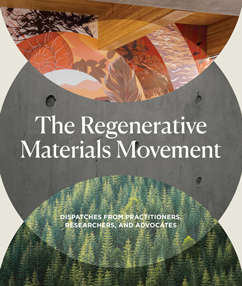
EquityThis chapter in ILFI’s book The Regenerative Materials Economy explores the often overlooked life cycle chemical and environmental justice impacts of building materials, focusing on insulation materials like fiberglass and spray polyurethane foam (SPF).
Through a framework rooted in green chemistry and environmental justice principles, authors Rebecca Stamm of HBN and Veena Singla of NRDC analyze manufacturing realities, environmental justice concerns, and environmental health impacts, providing recommendations to improve the industry’s sustainability and reduce the negative effects on marginalized communities.
 Health
Healthy Building Network (HBN) is excited to welcome Monica Nakielski as our new Board Chair!

“I was excited to join an organization having the impact that HBN does. Our influence and impact spans across industries and the globe with the science and resources we create,” Monica said. “I was interested in networking with other leaders in this space while contributing to the conversation and bringing a healthcare perspective to the table.”
A longtime champion of healthy buildings and spaces, Monica is the former Vice President of Sustainability at Advocate Aurora Health. She has over 15 years of experience as a sustainability practitioner and consultant to Fortune 500 organizations, governments, institutions, and nonprofits, with a focus on health care, hospitals, and health systems.
Monica has long had a passion for healthy materials. Traveling to her mother’s home country of Ecuador years ago, she was deeply impacted by the visible effects of industrial processes and pollution. It was clear that in those communities – like many in the US and around the world – it was the already marginalized communities who were bearing the brunt of the impact of our choices.
Monica first connected with HBN in 2011 at a BizNGO gathering, where she began to learn about the deeper connections between health and the built environment and the way business and product decisions can deeply impact both. She quickly became an advocate for healthier materials and joined the HBN board in 2019.
A commitment to create healthier spaces for patients, staff, and communities has shaped Monica’s career for more than a decade. Before joining Advocate Aurora Health, she served as the head of sustainability at Blue Cross Blue Shield of Massachusetts (BCBSMA), where she and her team worked to influence health insurers to be leaders of environmental sustainability. She also led and managed sustainability at MassGeneralBrigham (formerly Partners HealthCare) across 16 facilities and 18 million square feet.

As a leader in sustainable healthcare, Monica has been a vocal advocate for integrated approaches to creating safer and healthier spaces. She pushes back against the false dichotomy many practitioners feel of having to choose between climate or chemicals – i.e., focusing on energy efficiency or low-carbon choices versus eliminating toxic chemicals from products and the supply chain. She believes that both approaches can and must be aligned and integrated to create truly healthy spaces for all.
One of her proudest successes was impacting the amended fire code while working for a healthcare system in Boston in 2013. She had the opportunity to advocate with the Boston City Council to ensure that the new fire code met both public safety and public health needs. They were successful in removing toxic flame retardants from the requirements, which directly impacted the administrative headquarters they were building at the time. For that project, Monica’s team was successful in ensuring that more than 70% of the materials used in the building interiors avoided the worst chemicals of concern.
Monica is committed to blazing a trail and bringing others along for the journey. “We are able to drive this cultural shift and change, all the way down to selecting healthier, safer products, while we’re assuring the same, if not better health outcomes,” she said. “It comes down to connecting with our colleagues and educating them – finding the stories and the information that will inspire them to act.”
Monica believes that HBN is well-positioned to lead this work and create a healthier, more just world. “It’s up to us to lead, to share, to continue to collaborate, network, and leverage the science, tools, and resources that HBN publishes.”
Monica is incredibly excited for the growth and expansion that HBN is poised to take on in the coming years, and we are fortunate to have her as a leading voice guiding the way.
“What I find most exciting is that these discussions are bubbling up everywhere. With new ESG reporting standards and rules, people are being held accountable. I love the idea of continuing to raise awareness and drive perception, tying it back to the science. For people who have worked in the space of sustainability, we have waited for a really long time for people to connect the dots and to get as excited about this work as we are.”
We are grateful for Monica’s leadership and commitment to helping us achieve our vision that all people and the planet thrive in a world free of toxic chemicals.
“I want to leave the world a better world for my kids, and their kids, and the generations that follow,” she said. “I think we all do.”
 Pollution
PFAS are used in paints, food packaging and even cosmetics. We know they are in our water, air, soil and bodies – but less about how they will affect us.
PollutionThis video describes why plastic ends up in the environment and the solutions needed to disrupt the unsustainable use of plastic by holding manufacturers accountable for the products they make.
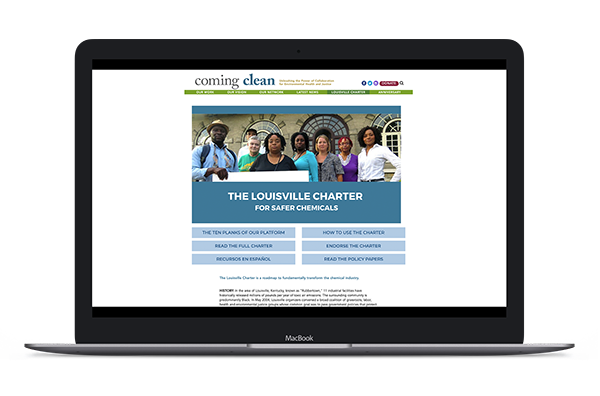
EquityThe Louisville Charter for Safer Chemicals, endorsed by over 100 organizations, confronts the chemical industry’s role in the climate crisis and provides guidance for advancing environmental justice in communities disproportionately affected by harmful chemical exposure.
 Climate Change
This report discusses how President Biden’s Executive Orders need to go further than examining energy sources to combat the climate crisis, emphasizing the need for the chemical industry to adapt and innovate, considering its significant impact on greenhouse gas emissions and environmental health.